Introduction
As of November 14, 2025, the Middle East sport economy is poised for explosive growth, presenting a $75 billion opportunity by 2034, with stadiums at the heart of this transformation under sports infrastructure Vision 2030. According to Oliver Wyman's report "Unlocking The Middle East's Sport Economy," the region can bridge the participation gap—where 85% of the population consumes sports content but only 30% actively participates—through innovative infrastructure and events like the 2034 FIFA World Cup in Saudi Arabia. With annual growth projected at 10%, sport tourism at 14%, and government commitments exceeding $100 billion, stadiums are evolving from event hosts to community hubs. This article explores the sport economy boom's impact on stadiums, their role in sustainable stadiums KSA, and future trends, with insights to be shared at the 2nd Global Stadium Congress.
The $75 Billion Sport Economy Opportunity
The Middle East sport economy could add $75 billion in value by addressing low participation rates, embedding sports into daily life via digital ecosystems and wellness districts. Globally, sport tourism accounts for 10% of travel spending ($600 billion annually), and the region's experience economy is set to hit $15 trillion by 2034. Major events like the 2030 Asian Games in Doha and 2034 Asian Games in Riyadh will drive this, with Saudi Arabia potentially unlocking $200 billion in tourism, media, and investment.
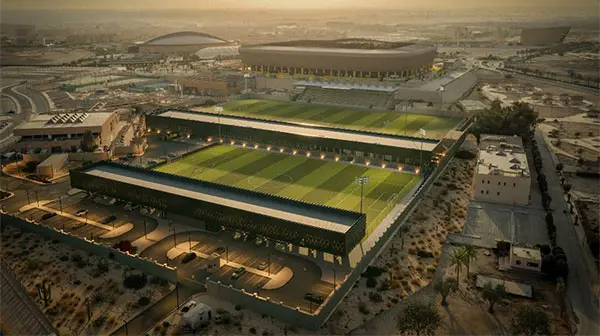
Stadiums are central, shifting from spectator venues to multi-functional spaces with participation facilities. In stadium design Saudi Arabia, Vision 2030's $100 billion+ infrastructure push includes stadiums that integrate health and community features, boosting fan experience technology.
Stadiums as Catalysts for Growth
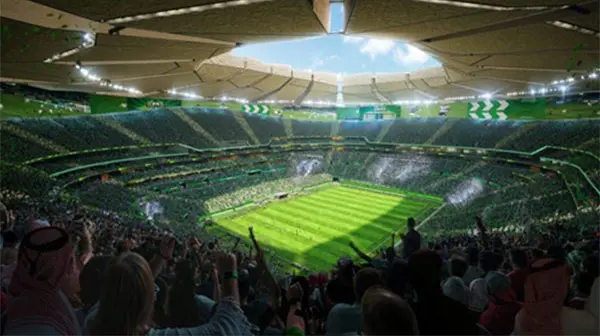
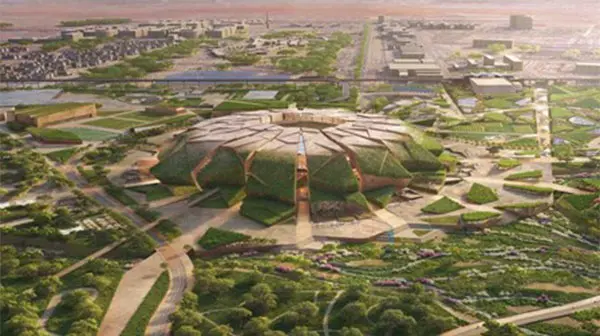
Stadiums will drive 40% of the sport economy's expansion, evolving into mixed-use hubs with gyms, retail, and e-sports zones for year-round revenue. Sustainable stadiums KSA, like Neom's eco-venue, use renewable energy to cut costs by 30%, aligning with global standards for FIFA 2034 stadiums. Crowd management stadiums benefits from AI to handle diverse crowds, while stadium seating innovations ensure inclusivity.
The smart stadium market supports this, with 5G and AR enhancing events, increasing attendance by 25%. Multi functional sports complexes KSA, such as Qiddiya, exemplify this, generating $1 billion in annual revenue.
Ready to explore these innovations in action? Click here to learn more and secure your spot at the upcoming conference.