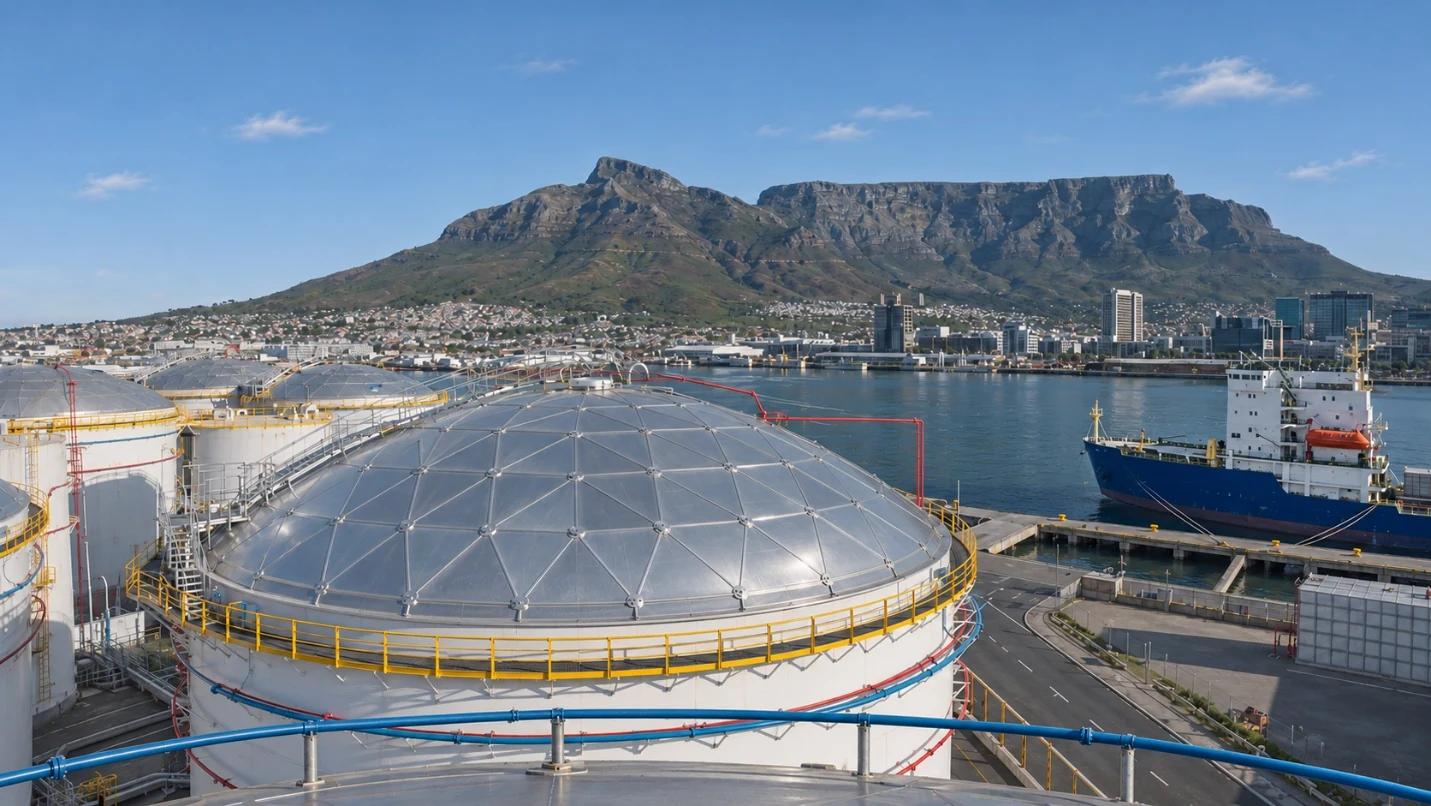
Two Sites Brought into One Operational Area
Transnet National Ports Authority has consolidated two sites within Cape Town’s liquid-bulk precinct into a single operational area, linking the move to improved commercial viability.
According to a SAnews report published on 8 October 2025, the consolidation forms part of FFS Tank Terminals’ appointment under a 25-year Terminal Operator Agreement. The agreement includes operation and maintenance responsibilities, with R195.7 million investment over the first three years supporting refurbishment and upgrades.
The consolidation offers an operational angle beyond additional storage capacity: how infrastructure across previously separate sites can be managed as part of one terminal area.
Coordinating Assets Across a Combined Site
From an asset-management perspective, bringing sites together creates an opportunity to review their maintenance requirements collectively. A combined view can help teams identify dependencies between assets, compare priorities and coordinate access for inspection or repair.
That assessment would benefit from consistent equipment records, clear maintenance responsibilities and an understanding of how work in one area could affect another. It can also help distinguish improvements needed for individual assets from changes requiring coordination across the wider terminal.
These are general considerations arising from consolidation. The announcement does not describe the detailed operating model, maintenance systems or physical connections between the two sites.
Refurbishment Alongside Long-Term Operations
TNPA’s stated objectives for the agreement include improving efficiency, sustaining regional liquid-bulk operations and supporting supply to local industries.
For terminal teams, the practical challenge is translating investment into dependable service. Reviewing refurbishment priorities alongside operating needs can help identify suitable work sequences, maintenance access requirements and potential constraints.
A shared operational area also provides a basis for aligning inspection records and work planning. However, consolidation alone does not establish that equipment has been upgraded or that performance has improved. Those outcomes depend on the implementation and subsequent operation of the facility.
The source confirms the signed agreement and site consolidation; planned capacity increases should remain clearly described as future outcomes.