


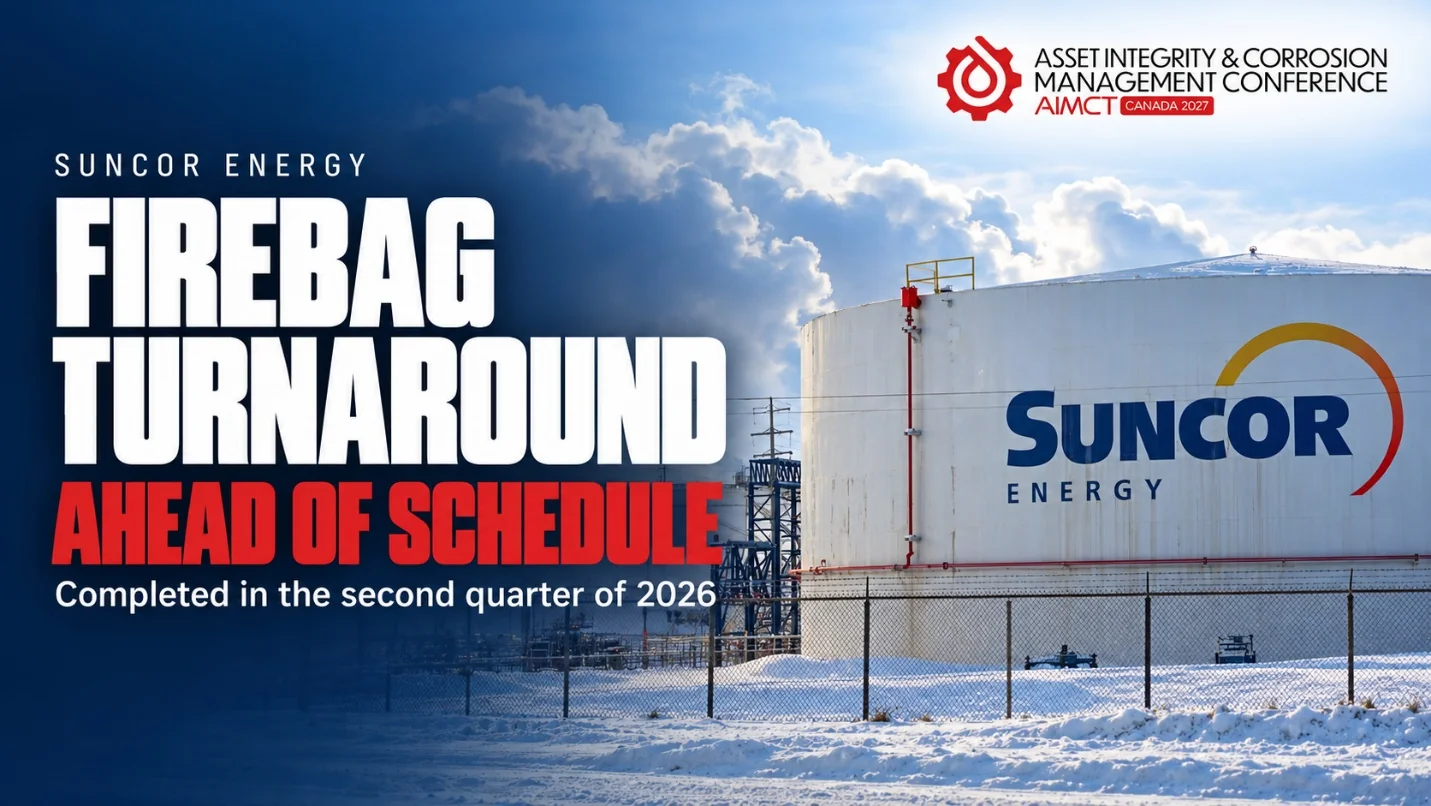
Firebag Turnaround Completed Ahead of Schedule
Suncor Energy reported that its planned Firebag turnaround was completed ahead of schedule during the second quarter of 2026, providing a specific maintenance milestone within its latest operating results.
According to Suncor’s second-quarter results published by BOE Report on 4 August 2026, the turnaround was the principal reason total Oil Sands bitumen production declined compared with the same quarter a year earlier.
Although the planned shutdown temporarily affected production, its early completion offers a relevant starting point for examining turnaround planning and execution across Alberta’s energy facilities.
Maintenance Activity Shapes Operating Availability
The operational results also showed second-quarter upgrader utilisation of 93%, compared with 86% a year earlier. Refinery throughput reached a second-quarter record of 470,600 barrels per day, with refinery utilisation of 92%.
Suncor attributed higher upgrader production and refinery throughput primarily to fewer maintenance activities during the quarter.
These company-wide results provide context on how maintenance schedules influence operating availability. They should not be interpreted as production gains caused by the Firebag turnaround or as direct evidence of improved equipment condition.
Turnaround Execution and the Next Operating Cycle
For maintenance and integrity professionals, Firebag’s reported outcome raises practical questions about preparing and delivering major shutdown programmes.
Relevant discussion areas include defining maintenance scope, coordinating specialist resources, managing inspection findings and preparing equipment for return to service. These are broader engineering considerations; the release does not disclose Firebag’s detailed work scope or quantify how far ahead of schedule the turnaround finished.
A useful measure of turnaround performance combines schedule delivery with completed maintenance scope and readiness for the next operating cycle.
This perspective connects shutdown execution with the longer-term objective of dependable asset performance. It also encourages teams to consider how findings recorded during an outage can inform subsequent inspection and maintenance decisions.


