Fuel Security Brings Storage Infrastructure into Focus
South Africa’s fuel supply chain is becoming increasingly dependent on storage and terminal infrastructure that can operate safely, reliably and efficiently over the long term.
Recent remarks highlighted by SAnews reinforce the strategic importance of the fuels industry to mobility, production, trade and logistics. Transport Minister Barbara Creecy also emphasised that future liquid-fuels growth requires modern, efficient and well-regulated infrastructure, alongside long-term investment and stronger operational performance.
For tank and terminal operators, that translates into a clear technical priority: storage capacity must be matched by strong integrity management.
Island View Becomes a Reliability Test
The Island View precinct at the Port of Durban sits at the centre of this infrastructure discussion. Government plans are aimed at supporting future growth in fuel imports, storage capacity and associated logistics services while maintaining dependable supply.
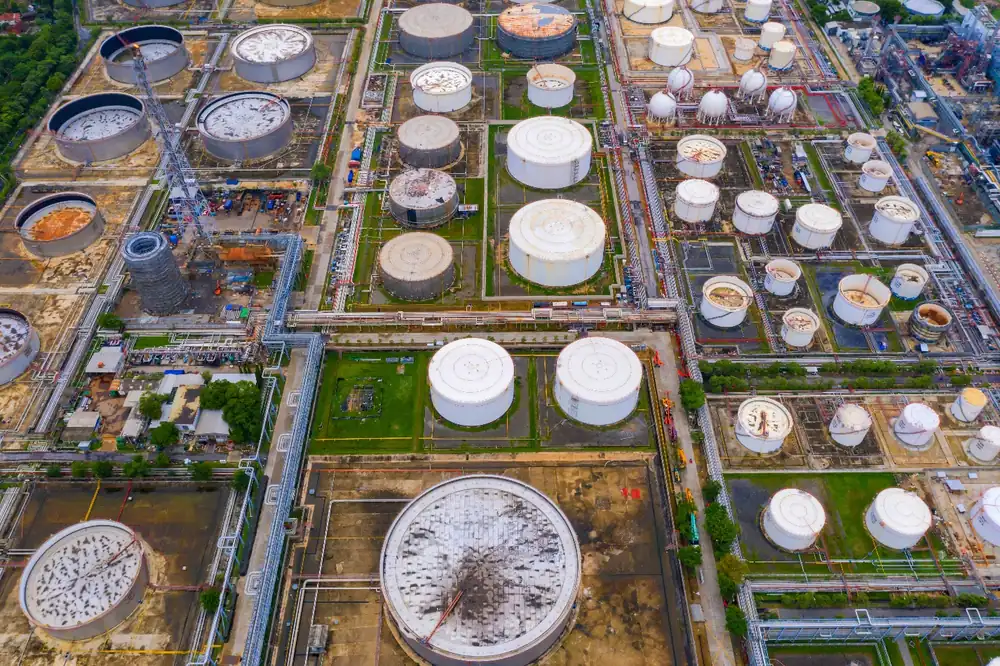
A separate South African Government statement places direct attention on the physical assets themselves. New terminal arrangements require infrastructure — including bulk fuel storage tanks, pipelines and related systems — to be maintained according to international best practices, with the necessary capital investment to keep terminals efficient, reliable and safe.
That raises the importance of corrosion monitoring, floor and shell inspection, settlement assessment, leak prevention, maintenance planning and lifecycle management across ageing tank farms.
Tank Integrity Becomes a Supply-Chain Resilience Issue
Tank integrity is no longer only a maintenance concern. Storage failure can affect product availability, terminal throughput, environmental performance and wider supply continuity.
Operators therefore need inspection programmes that identify degradation before it becomes operational disruption. Risk-based inspection, advanced NDT, corrosion mapping, digital monitoring and condition-based maintenance can help prioritise intervention while supporting longer asset life.
For terminal operators, the goal is not simply to keep tanks in service. It is to maintain dependable storage capacity while protecting safety, product quality and operational resilience.