Introduction
Saudi Arabia continues to accelerate its industrial transformation under Vision 2030, strengthening infrastructure, expanding manufacturing capabilities, and enhancing supply chain integration. In a recent announcement, the Ministry of Industry and Mineral Resources highlighted progress in advancing industrial infrastructure and reinforcing the Kingdom's position as a globally competitive industrial hub.
As facilities scale in size and complexity, operational reliability becomes fundamental to sustaining growth. Industrial expansion is not defined solely by new capacity, but by the ability to ensure safety, efficiency, and long-term asset performance. In this evolving landscape, asset integrity is emerging as a strategic priority.
Industrial Growth and Infrastructure Resilience
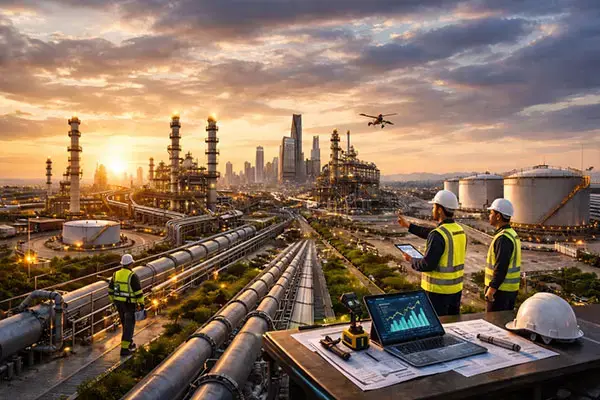
Saudi Arabia's expanding industrial cities, processing facilities, and manufacturing hubs reflect a broader commitment to economic diversification and sustainable development. Advanced infrastructure provides the foundation for competitiveness, yet maintaining the performance of these complex assets requires structured lifecycle strategies.
Digital inspection systems, predictive maintenance technologies, and corrosion management frameworks are increasingly vital to preserving operational stability. By embedding modern integrity systems into industrial operations, the Kingdom strengthens resilience, minimizes risk exposure, and supports sustainable production performance.
To read the official government announcement outlining these infrastructure advancements, click here.
This shift toward proactive, risk-based management enhances safety outcomes, reduces unplanned shutdowns, and optimizes capital allocation. As infrastructure modernizes, the integration of advanced monitoring and lifecycle optimization becomes central to industrial reliability.
Integrity as a Strategic and Sustainability Priority
Asset integrity today extends beyond maintenance practices. It influences environmental performance, regulatory compliance, and investor confidence. Reliable infrastructure reduces operational disruptions and strengthens transparency in performance reporting, aligning industrial progress with sustainability objectives.
By prioritizing structured inspection programs, corrosion mitigation strategies, and predictive analytics, organizations reinforce long-term asset value. Integrity management is increasingly recognized as a strategic discipline aligned with operational excellence and national development goals.