Cape Town Secures Long-Term Investment in Liquid-Bulk Capacity
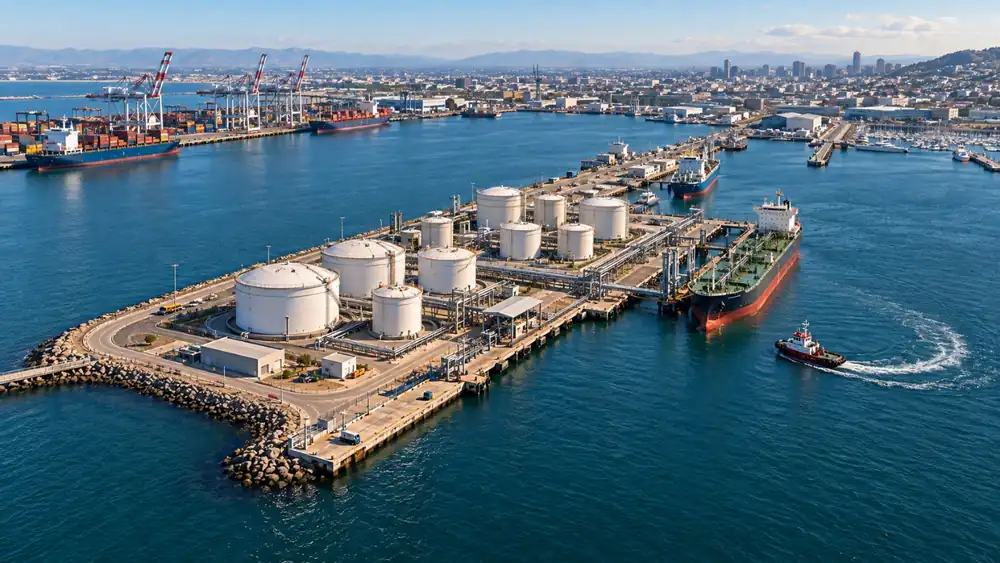
The Port of Cape Town is set for a significant expansion of its liquid-bulk storage capability following a 25-year Terminal Operator Agreement between Transnet National Ports Authority and FFS Tank Terminals.
Under the agreement, FFS Tank Terminals will invest R195.7 million during the first three years to refurbish terminal infrastructure and deliver upgrades aimed at improving operational efficiency and supporting security of supply to local industries.
The investment marks a notable capacity increase for two important products handled through the port: diesel and bitumen.
Diesel Capacity Set to Double
Once operational, the upgraded terminal is expected to increase diesel storage capacity by 100%, reaching 29,200 m³. Bitumen storage will rise from 4,700 m³ to 6,900 m³, representing an increase of approximately 47%.
The project also consolidates two sites in Cape Town’s liquid-bulk precinct into a single operational area, creating an opportunity to coordinate storage, transfer and maintenance activities more efficiently.
For terminal operators, additional capacity brings a parallel requirement to maintain dependable infrastructure. Higher throughput places continued importance on tank condition, transfer systems, corrosion management, inspection planning and maintenance execution.
Expansion Makes Lifecycle Performance More Important
A 25-year concession means the value of the investment will ultimately depend on how effectively the facility performs throughout its operating life.
Storage tanks require structured inspection programmes capable of identifying floor, shell, roof and coating degradation before it affects availability. Pipelines, pumps, loading infrastructure and associated safety systems must also remain reliable as throughput increases.
The Cape Town development therefore illustrates a wider industry shift: storage expansion is increasingly tied to lifecycle integrity and operational resilience, rather than capacity alone.
TNPA has positioned the agreement as part of its effort to sustain liquid-bulk operations, increase port capacity and improve cargo throughput.