


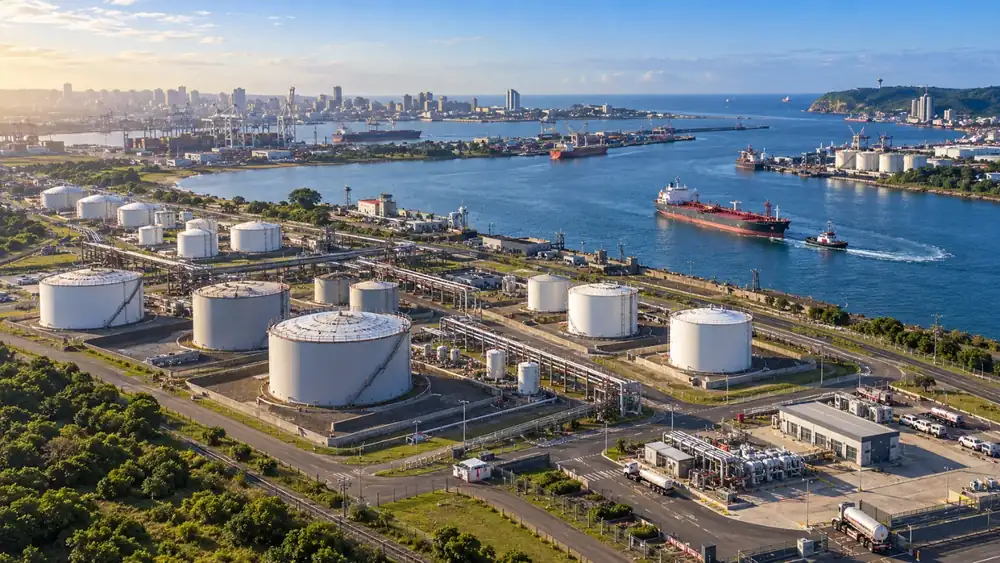
Maydon Wharf Moves Toward a New Liquid-Bulk Facility
A R1.3 billion liquid-bulk terminal development at the Port of Durban’s Maydon Wharf Precinct is bringing new storage, transfer and loading infrastructure into focus.
Transnet National Ports Authority signed a 20-year Terminal Operator Agreement with Mnambithi Terminals for the facility at Maydon Wharf 6. The planned terminal will support high-flash liquid-bulk cargo and introduce direct road and rail loading, an on-site truck staging area and automated loading systems intended to improve operational efficiency and ease road congestion around the precinct.
New Tanks and Pipelines Form the Core of the Development
The project is structured in two phases.
According to TNPA, the initial phase includes demolition of existing structures and foundations, followed by the installation of storage tanks, associated infrastructure, a road-loading gantry and bulk-transfer pipelines connecting the terminal with relevant port berths. The second phase will add the remaining tanks and supporting infrastructure.
This integrated approach makes the development particularly relevant to terminal integrity. Tank reliability cannot be considered separately from pipelines, pumps, loading systems and berth interfaces. Each connection becomes part of the product-containment chain and therefore requires coordinated inspection, maintenance and safety management.
Automation Changes the Terminal Safety Equation
Automated loading and integrated road-and-rail handling can improve throughput, but they also place greater emphasis on control-system reliability, instrumentation, emergency shutdown capability and disciplined preventive maintenance.
For a terminal operating under a 20-year agreement, lifecycle performance will depend on how effectively tanks and transfer infrastructure are monitored after commissioning. Corrosion management, inspection planning, leak detection and maintenance of loading equipment will remain critical as operating cycles accumulate.
Designing inspection access and maintainability into new infrastructure can also reduce future intervention complexity while supporting more predictable terminal availability.


