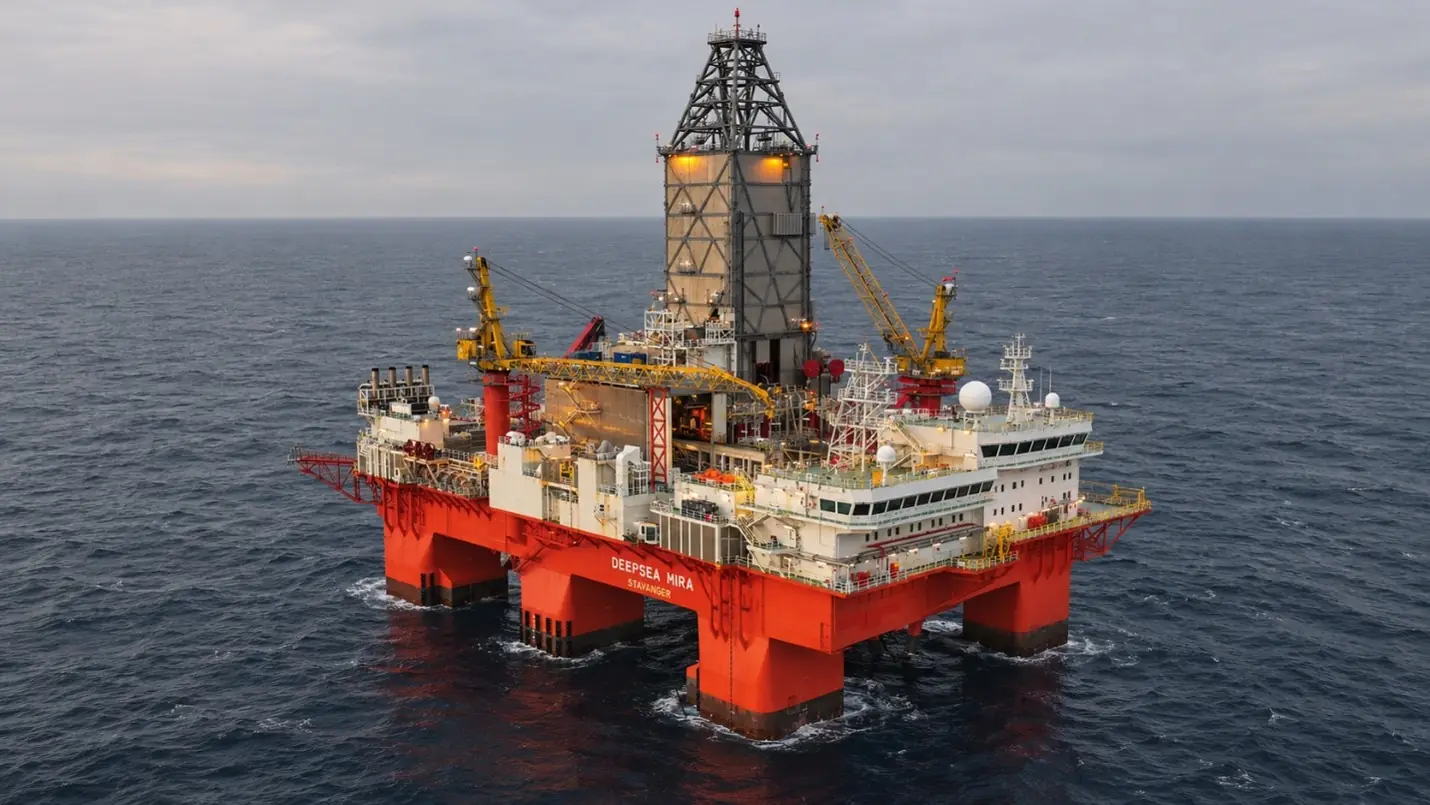
Four Well Tests Connect Maintenance with Campaign Delivery
A technical paper presented at the Offshore Technology Conference in May 2025 documents how maintenance planning supported four consecutive ultra-deepwater drill stem tests offshore Namibia. The campaign combined specialised equipment, flow assurance preparation and monitoring to collect reservoir data for potential development decisions.
According to the supplied abstract of OTC-35641-MS, the operations took place in water depths reaching 3,100 metres. The authors identify precise planning and a robust maintenance plan between wells as requirements for successfully completing the testing programme.
Maintenance Between Wells Supports Equipment Readiness
Two drilling rigs equipped with bespoke surface well-testing packages supported the exploration and appraisal campaign in Block 2913B. This arrangement enabled consecutive testing and the collection of representative fluid samples and dynamic reservoir information.
The maintenance lesson is particularly relevant to repeated operations: completing one test creates a transition into the next, when equipment readiness must remain part of the delivery plan. For an integrity audience, the campaign offers a practical basis for discussing how maintenance time and responsibilities are incorporated into operational schedules.
The abstract does not specify individual servicing tasks or inspection intervals. Its contribution is the explicit link between maintenance planning across successive wells and successful campaign execution. Such discussions can help teams consider readiness across a campaign, beyond each individual test alone.
Flow Assurance and Monitoring Strengthen Operational Preparation
Hydrate formation was a central flow assurance challenge. The team used a transient wellbore simulator to determine operating parameters and identify mitigation measures before execution.
The selected drill stem test string incorporated chemical injection lines and acoustic telemetry. Downhole gauges supported real-time monitoring, while the telemetry system enabled control of selected lower completion valves. Surface equipment included Coriolis meters and a separate multiphase flow meter.
Together, these reported measures illustrate the breadth of preparation surrounding the maintenance plan. The campaign connected equipment selection, operating limits and monitoring with the practical demands of repeated testing. The authors report that the programme finished with zero HSE and environmental incidents, providing a documented case for examining operational preparation in Namibia’s offshore environment.