


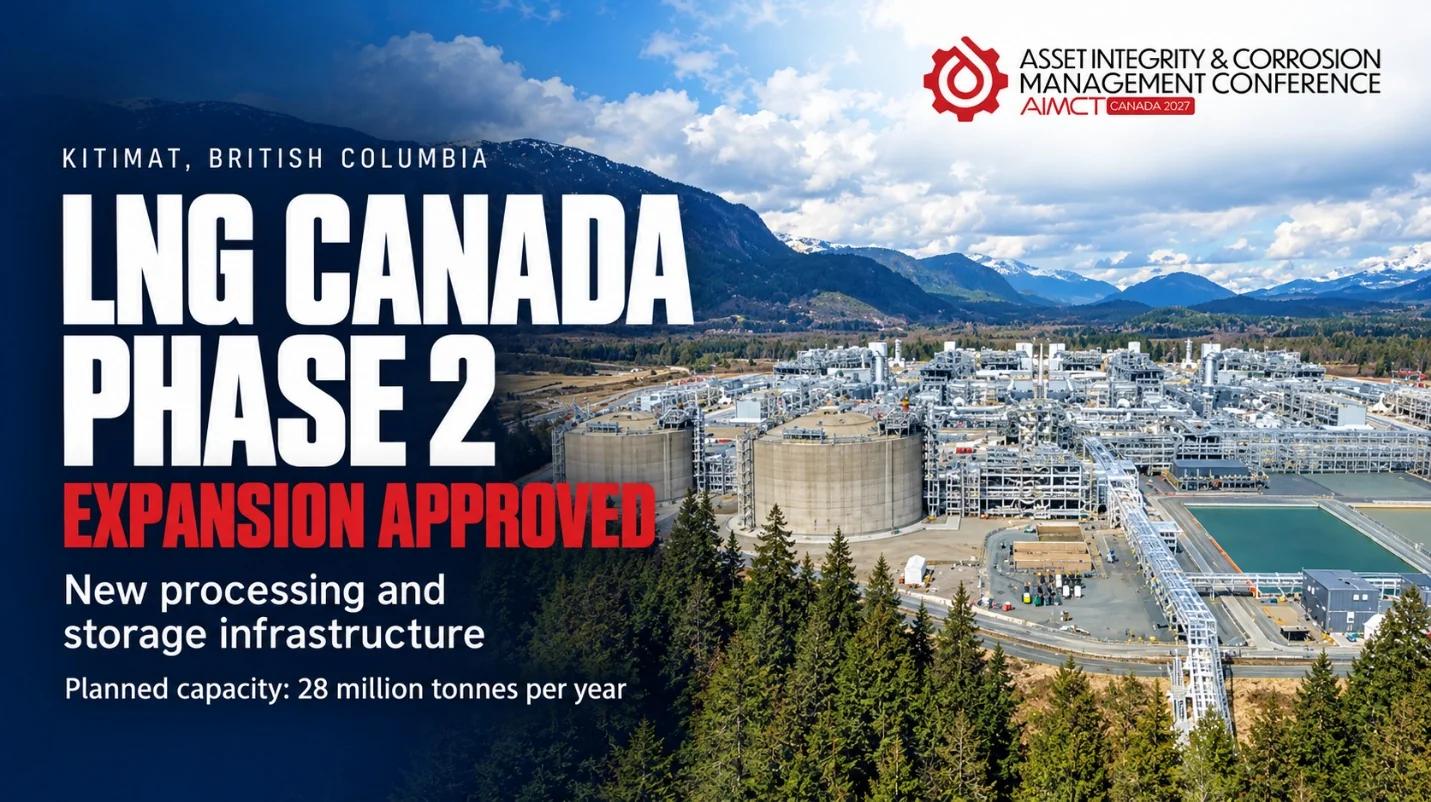
LNG Canada Approves Major Expansion at Kitimat
LNG Canada has reached a major development milestone following the Final Investment Decision (FID) for Phase 2 of its LNG export facility in Kitimat, British Columbia.
According to the 29 September 2026 announcement, the project's joint-venture participants — Shell, PETRONAS, PetroChina, Mitsubishi Corporation and KOGAS — have approved an expansion designed to double annual LNG production capacity from 14 million to 28 million tonnes.
The development will introduce two additional liquefaction trains alongside new storage, marine-loading and supporting process infrastructure.
For Canada's energy sector, the investment represents an important transition from establishing LNG export operations toward expanding production capacity within an existing operating facility.
Two New Liquefaction Trains Expand Processing Infrastructure
The expansion includes two additional LNG processing trains, bringing the facility's planned total to four.
LNG Canada's original infrastructure was designed and engineered to accommodate this four-train configuration, providing a foundation for the next development phase.
Phase 2 also includes an additional LNG storage tank, condensate tank, loading berth and expanded utility and process systems.
Integrating these assets into an operating LNG facility introduces important engineering considerations involving pressure equipment, piping interfaces, rotating machinery, instrumentation and operational coordination.
For integrity teams, maintaining accurate equipment records, verifying installation quality and establishing inspection requirements during commissioning can support dependable long-term performance.
Compressor Expansion Adds Another Reliability Dimension
Beyond Kitimat, the Phase 2 development includes plans to expand transportation capacity along the existing 670-kilometre Coastal GasLink pipeline through five new compressor stations.
These facilities introduce additional requirements for compressor reliability, vibration monitoring, pressure-system integrity and preventive maintenance.
Across the LNG plant, maintenance readiness will also depend on how new processing equipment, storage systems and utilities are integrated with existing operations.
Engineering change management, commissioning verification, inspection planning and documented technical acceptance can help establish reliable operating conditions before expanded production begins.
These are engineering considerations associated with the approved expansion, not reported equipment deficiencies at LNG Canada's facility.


