Introduction
As oil gas challenges 2025 unfold, carbon capture oil gas emerges as a pivotal strategy for sustainability, helping the industry navigate regulatory shifts toward net-zero emissions. With global pressures mounting from policies like the EU's Carbon Border Adjustment Mechanism and U.S. Inflation Reduction Act incentives, oil & gas firms must integrate carbon capture and storage (CCS) to reduce CO2 footprints in asset integrity management oil gas. The CCS market is expected to grow from $2.8 billion in 2025 to $4.3 billion by 2030 at a 8.9% CAGR, driven by tech advancements and mandates. This article explores CCS innovations, regulatory navigation, and their integration with predictive maintenance oil gas, digital transformation oil gas, and FRP oil gas innovations for resilient operations in volatile markets.
The Regulatory Landscape Driving Sustainability in Oil & Gas
Regulatory shifts are reshaping oil & gas, with 2025 seeing tightened emissions caps and incentives for carbon capture oil gas. In the U.S., the Bipartisan Infrastructure Law allocates $12 billion for CCS, while Europe's ETS revisions impose higher carbon prices, pushing operators to adopt sustainable practices or face penalties. In MENA, KSA's Vision 2030 targets 50% emissions reduction by 2030, aligning asset integrity KSA with global standards.
These changes address climate impacts, where oil & gas contributes 15% of global emissions, but also create opportunities for revenue through carbon credits. Challenges include compliance costs and tech integration in aging infrastructure oil gas, vulnerable to CUI monitoring oil gas issues. Offshore oil gas innovations face unique hurdles, like subsea storage risks, necessitating RBI inspection oil gas for safe CCS deployment. As the oil gas supply chain 2025 evolves, regulations like IMO's carbon intensity indicators demand holistic sustainability, blending CCS with FRP pipes oil gas for corrosion-resistant transport lines.
Innovations in Carbon Capture for Oil & Gas Sustainability
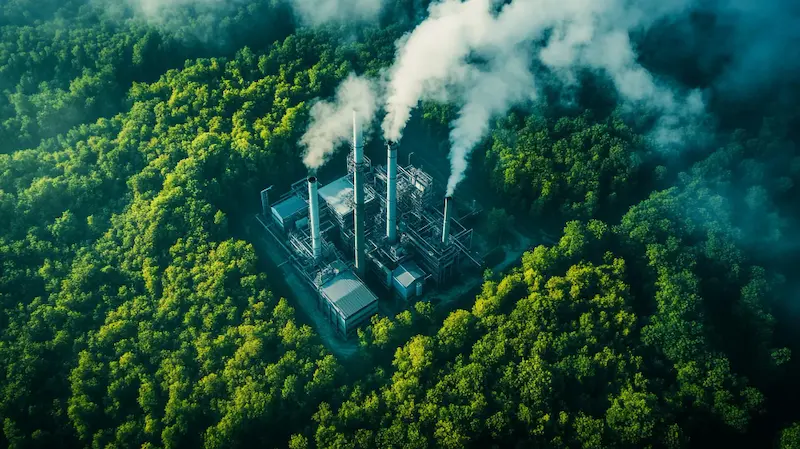
Carbon capture oil gas innovations include post-combustion amine solvents and membrane separation, capturing 90% of CO2 from flue gases with lower energy penalties. In digital transformation oil gas, AI optimizes capture processes, reducing costs by 20% through predictive modeling. Bio-based solvents enhance efficiency, tying into bio-based water remediation for wastewater co-treatment.
Storage advancements like saline aquifers and depleted reservoirs ensure long-term sequestration, with monitoring via seismic sensors for leak detection. FRP innovations oil gas support this by providing durable, non-corrosive pipelines for CO2 transport, minimizing risks in harsh environments. Predictive maintenance oil gas integrates AI to monitor CCS infrastructure, preventing failures in aging oil gas infrastructure. Offshore oil gas innovations benefit from floating CCS hubs, as piloted in Norway, adaptable for Gulf operations. These techs align with regulatory demands, enabling carbon capture oil gas to offset emissions while generating credits.