


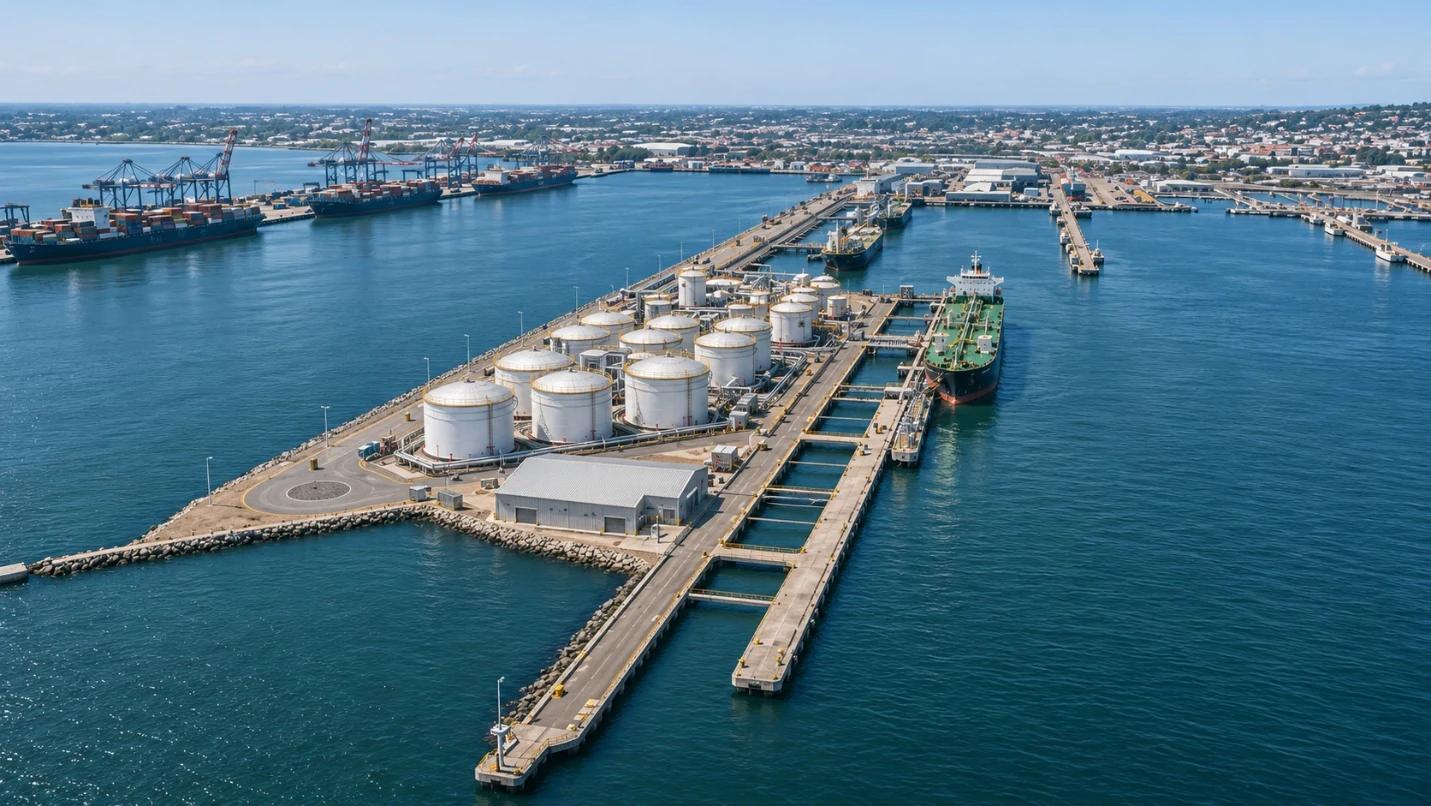
Existing Import Pipeline Planned for Additional Cargoes
An existing import pipeline at the Port of Cape Town is set to take on a broader role under plans to refurbish a liquid-bulk terminal operated through a long-term concession.
According to the SAnews announcement, Transnet National Ports Authority selected FFS Tank Terminals as the preferred bidder to refurbish and operate the facility for 25 years.
The planned work includes repurposing a pipeline currently used for vegetable and edible oils to accommodate additional cargoes, including caustic soda lye and monoethylene glycol. The announcement describes a planned capability, rather than confirming that chemical-handling operations have started.
Terminal Upgrades Extend Across Receiving Infrastructure
The reported project scope also includes repurposing the Nautilus facility and upgrading gantry and receiving systems. Projected investment totals R102 million, including capital and maintenance costs.
Together, these changes place attention on the connected infrastructure through which cargo moves. A terminal’s ability to accommodate different products depends on the suitability of its transfer arrangements as well as its storage assets.
Changing Service Introduces Different Engineering Questions
From an engineering perspective, adapting existing infrastructure for additional cargoes creates a need to reassess its intended service.
Relevant considerations include the compatibility of pipeline materials, seals and other wetted components with each product under the proposed operating conditions. Cleaning arrangements and segregation also warrant attention where different cargoes could create contamination or compatibility concerns.
Inspection history, equipment condition and maintenance requirements provide further inputs to that assessment. Receiving procedures, product identification and spill-response arrangements should likewise reflect the substances being handled.
These are engineering considerations arising from the proposed change of service; the announcement does not disclose the project’s detailed design or inspection findings.
Pipeline repurposing places the relationship between product properties, equipment condition and operating procedures at the centre of terminal readiness.


