


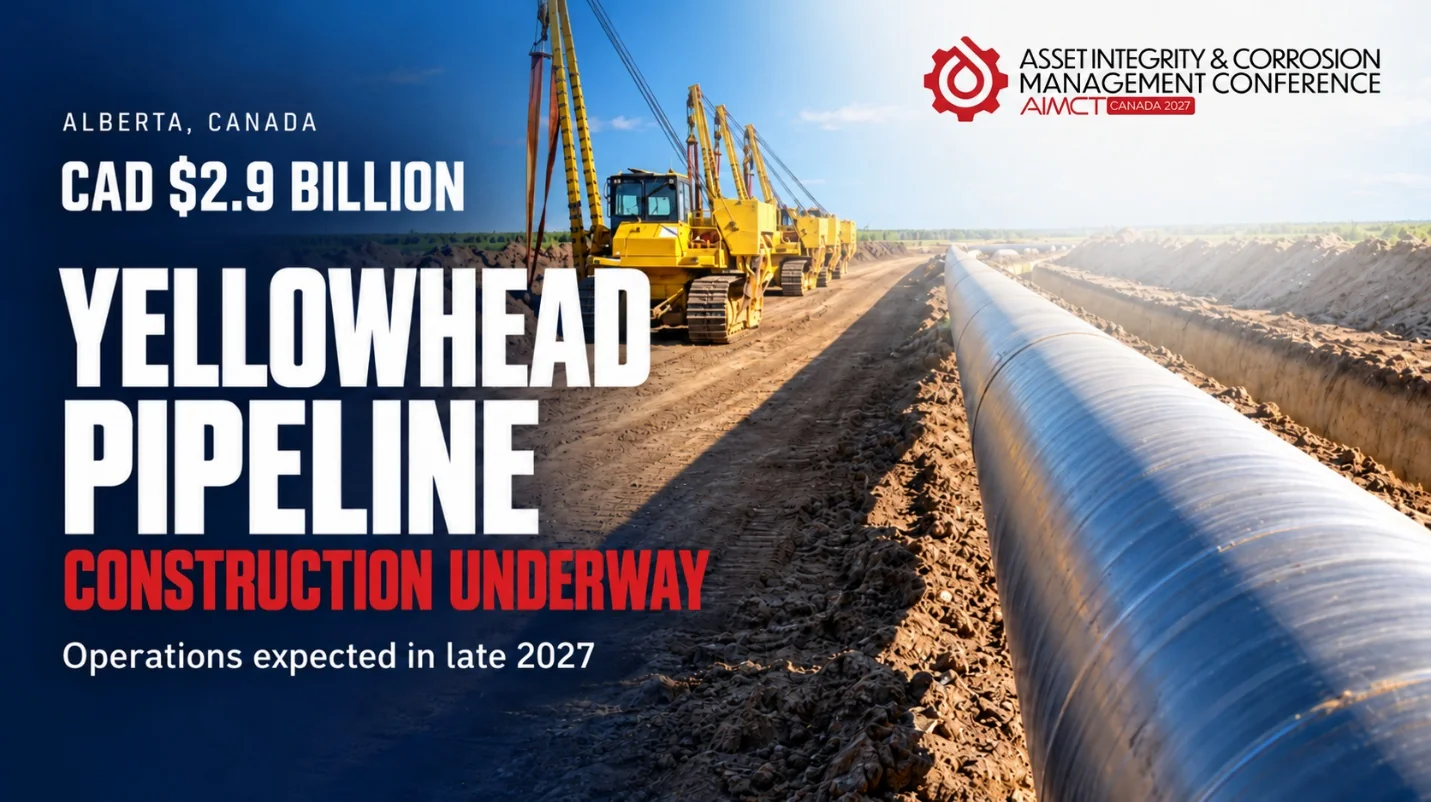
Yellowhead Pipeline Reaches Major Construction Milestone
Alberta's natural gas infrastructure expansion has reached a significant milestone as the CAD 2.9 billion Yellowhead Pipeline officially breaks ground, advancing a major transmission development expected to enter service in late 2027.
According to the Government of Alberta's 13 October 2026 announcement, the project involves approximately 235 kilometres of new natural gas pipeline and associated facilities, adding more than one billion cubic feet per day of transportation capacity.
Developed by Canadian Utilities through ATCO Energy Systems, the project will connect the Peers area with Fort Saskatchewan, supporting growing industrial demand in Alberta's Industrial Heartland.
The development also marks an important engineering transition from project planning and approvals toward construction, inspection and eventual commissioning.
Pipeline Construction Places Engineering Verification in Focus
Large-scale high-pressure gas pipeline construction requires coordinated quality assurance throughout installation.
Welding procedures, non-destructive examination, coating application, material traceability and construction documentation are essential considerations for maintaining pipeline integrity before operations begin.
For a project extending across 235 kilometres, consistent inspection standards and effective construction-quality records help establish the technical foundation for future integrity management.
Pressure testing, installation verification and documented engineering acceptance are equally important as newly constructed infrastructure progresses toward commissioning.
These represent standard engineering requirements associated with pipeline development, rather than reported construction deficiencies on the Yellowhead project.
Compressor Infrastructure Adds Long-Term Reliability Requirements
Beyond the pipeline itself, Yellowhead's development includes supporting compressor and control infrastructure designed to enable reliable gas transportation.
Such facilities introduce additional considerations involving rotating-equipment performance, pressure-system integrity, vibration management, instrumentation and preventive maintenance.
For asset integrity and maintenance teams, the transition from construction to operation requires clear equipment records, inspection baselines, commissioning checks and established maintenance responsibilities.
The Yellowhead Pipeline development is expected to support petrochemical manufacturing, hydrogen production, power generation and other industrial activities.
Reliable operation will therefore depend on integrating construction quality with long-term maintenance and asset-management strategies.


