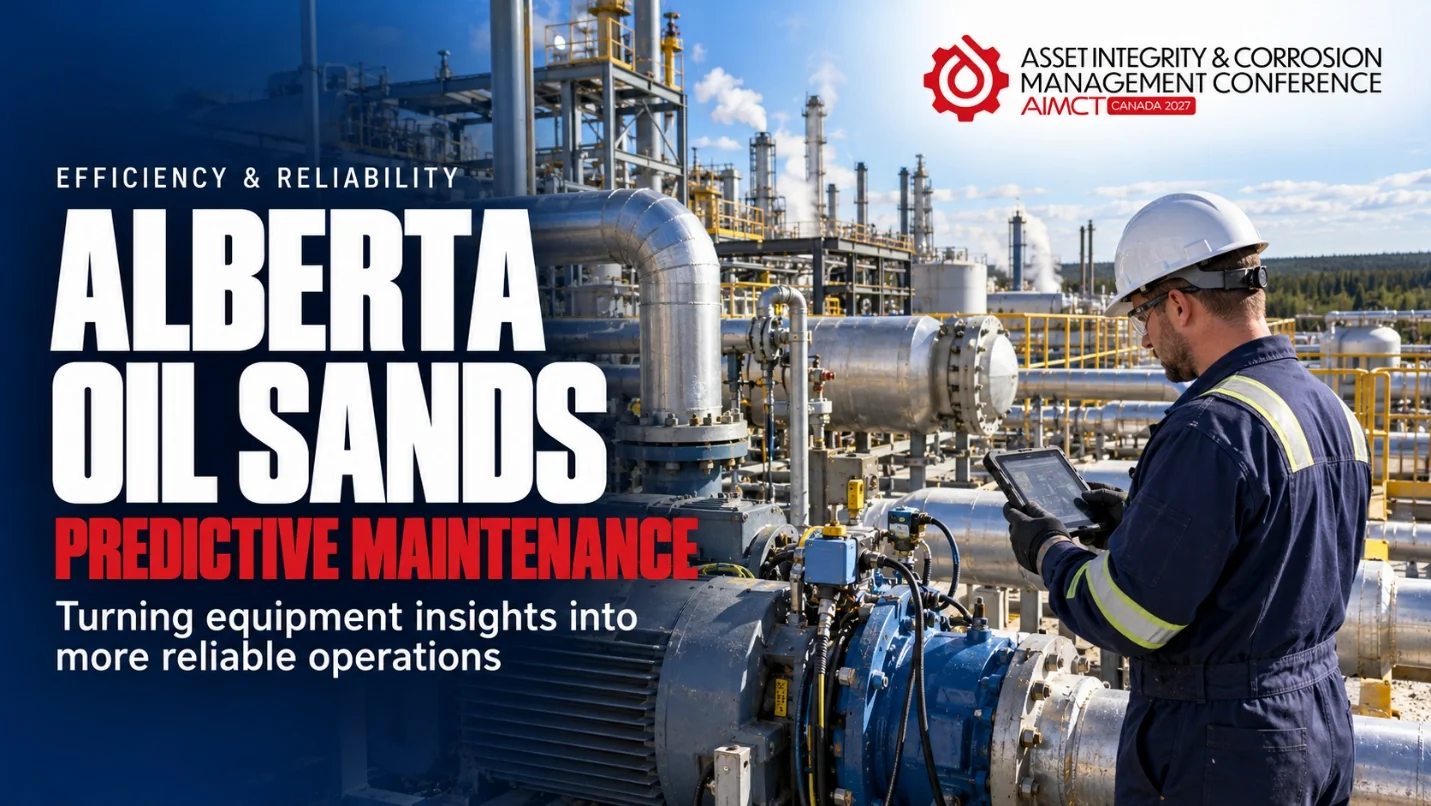
Alberta Oil Sands Efficiency Gains Put Maintenance in Focus
Alberta's oil sands industry is demonstrating how improved operating practices and equipment reliability can support stronger long-term production performance.
According to a June 2026 BOE Report article, drawing on research from Enverus Intelligence Research and commentary from S&P Global, oil sands operations have become increasingly cost-competitive through technological improvements and operational experience.
Analysts highlighted advances in drilling efficiency, well placement and production practices. Importantly, predictive maintenance on critical equipment was identified as one contributor to reducing downtime and unplanned outages.
For Alberta's energy operators, this reinforces the growing importance of maintaining equipment availability throughout demanding production cycles.
Predictive Maintenance Supports Long-Life Production Assets
Unlike many conventional and shale developments, oil sands facilities are characterised by substantial upfront investment and long operating lifecycles.
This places considerable value on keeping existing infrastructure operating reliably.
The industry analysis indicates that some steam-assisted gravity drainage (SAGD) operations can achieve sustaining break-even costs below US$40 per barrel, reflecting improvements in operating efficiency.
Predictive maintenance can contribute to this performance by helping maintenance teams identify emerging equipment problems before they result in unexpected shutdowns.
Condition monitoring, vibration analysis, temperature trending and equipment-performance data can provide useful indications of deterioration, supporting more informed maintenance scheduling.
Equipment Reliability Becomes a Long-Term Operational Priority
SAGD facilities depend on interconnected production and processing infrastructure, including steam-generation equipment, pumps, pressure systems, heat exchangers and process piping.
Maintaining these assets requires coordinated inspection, corrosion management and mechanical reliability strategies.
For integrity engineers, the value of predictive maintenance lies in connecting equipment-condition information with practical decisions about inspection, repair and replacement.
It can also support risk-based maintenance planning by helping teams prioritise equipment requiring attention before the next scheduled intervention.
While the BOE Report identifies predictive maintenance as a contributor to improved operating performance, it does not quantify the resulting downtime reduction or identify a specific operator programme.