Introduction
In the face of water scarcity MENA, advancements in wastewater recycling UAE are revolutionizing water resource management, turning a challenge into an opportunity for sustainable water solutions across the region. As urban water growth MENA accelerates with populations projected to rise by 18% by 2050, wastewater management Dubai is at the forefront, leveraging innovative technologies to reclaim water for irrigation, industry, and beyond. With the wastewater recycling market in MENA expected to reach $44.5 billion by 2032 at a 4.1% CAGR, driven by circular economy policies, these advancements support climate resilient water infrastructure and align with public private partnerships water initiatives. This article explores cutting-edge wastewater recycling technologies, their applications, and future trends, showcasing how they address urban and environmental needs in the region.
The Need for Wastewater Recycling in MENA
Water scarcity MENA affects over 170 million people, with the UAE and other Gulf states relying on 90% desalinated water that strains energy resources. Urban water growth MENA, fueled by megaprojects like Dubai's Expo City, increases demand, yet 82% of wastewater remains untapped due to inadequate recycling infrastructure. Wastewater management Dubai faces contamination from PFAS wastewater MENA and microplastics, necessitating advanced treatment to meet safety standards.
The economic case is compelling: Recycling reduces freshwater costs by 30-50%, critical amid volatile energy prices, while supporting stormwater management UAE by integrating runoff treatment. Environmental benefits include lower desalination footprints, aligning with climate resilient water infrastructure goals. Public private partnerships water, like those in Abu Dhabi's $1.2 billion water reuse project, drive adoption, making wastewater recycling UAE a cornerstone of regional sustainability.
Innovative Technologies Driving Wastewater Recycling
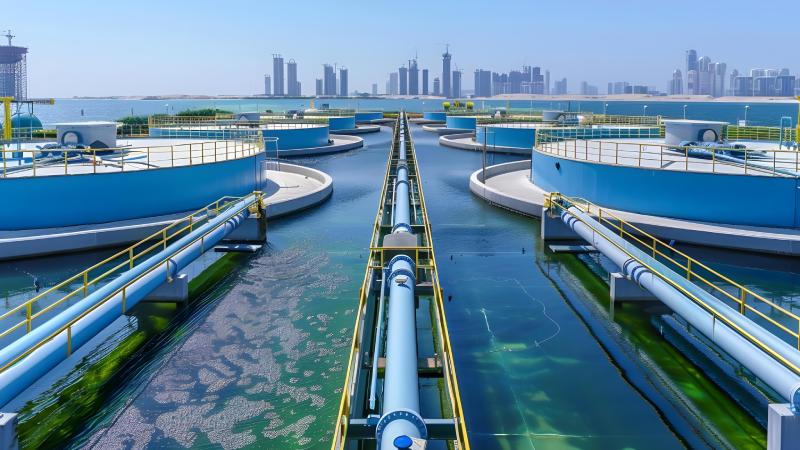
Advanced technologies are transforming wastewater recycling UAE, starting with membrane bioreactors (MBRs) that combine biological treatment with filtration, producing high-quality effluent for non-potable uses. In Dubai, MBRs at Al Warsan treat 260,000 cubic meters daily, showcasing scalability. Smart city water innovation integrates AI to optimize treatment, reducing energy use by 40% through real-time adjustments.
Bio-based water remediation employs constructed wetlands and microbial fuel cells, degrading contaminants like PFAS wastewater MENA while generating energy, cutting costs by 20%. Desalination sustainable MENA complements this by treating brine, with solar-powered reverse osmosis plants in Saudi Arabia reclaiming 70% of wastewater. Nanotechnology enhances removal of microplastics wastewater, ensuring compliance with 2025 EU water directives. These innovations support flood management MENA by recycling stormwater, aligning with water management conference 2025 discussions on integrated systems.